Lucky Bamboo Turning Yellow And Solutions To Fix It

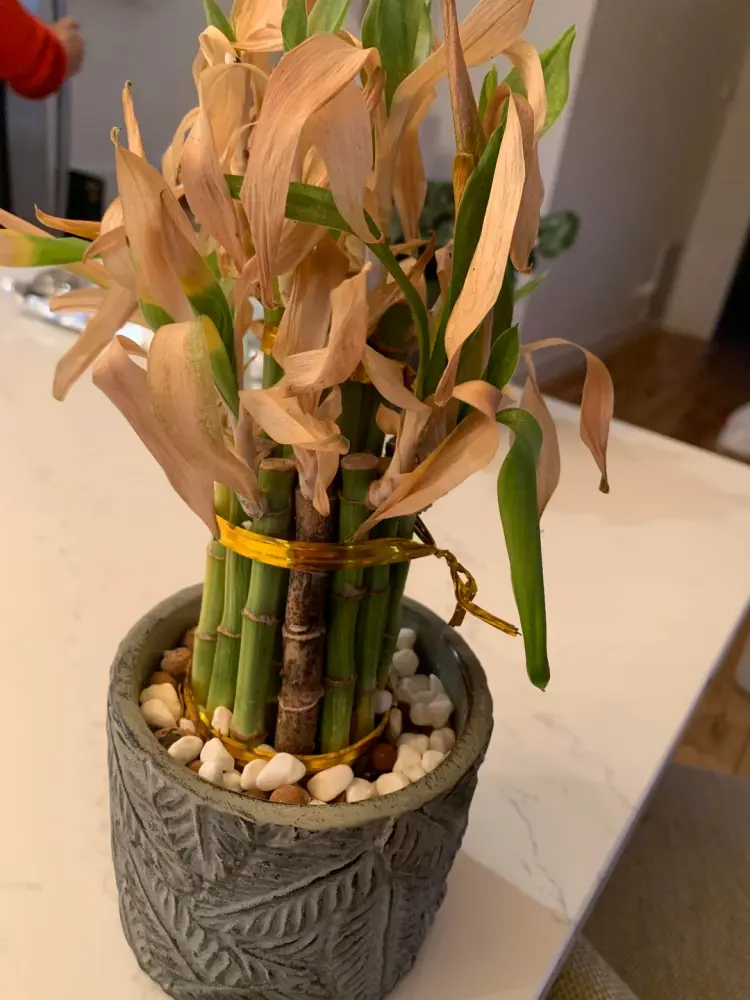
Lucky Bamboo is a popular choice for plant enthusiasts and casual greenery admirers alike as it is a symbol of prosperity and good fortune. But when those once lush leaves start to yellow, it can feel like your luck is turning.
In this guide, we have discussed common culprits behind yellowing leaves, from overwatering woes to light location struggles. You can get your Lucky Bamboo back on track to thriving and bringing you continued good fortune. Let's begin!
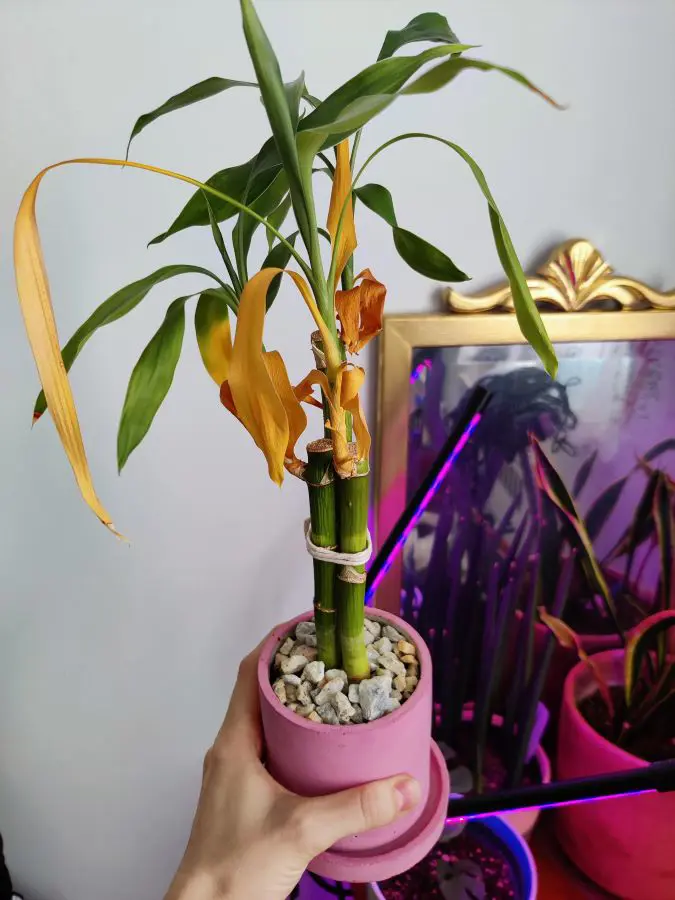
1. Overwatering
For Plants in Soil
For Lucky Bamboo grown in soil, opt for a well-draining, good-quality potting mix specifically formulated for indoor plants. This ensures proper aeration and prevents root rot, another contributor to yellowing leaves.
Regarding the watering process, this plant prefers consistently moist but not soggy soil, so adjust your watering schedule based on the climate and container size. Allow the top inch of soil to dry to the touch before watering again. Over time, you'll develop a watering rhythm specific to your plant and environment.
For Plants in Water
Fresh water is crucial! So, change the water in your Lucky Bamboo container at least once a week or more frequently if the water appears cloudy or discolored.
Also, use filtered or rainwater whenever possible, as tap water can contain chemicals that harm the roots. Rinse the pebbles thoroughly during water changes to remove any accumulated debris or bacteria.
Water Quality
Tap water can contain chlorine, fluoride, and other chemicals that can damage the delicate roots of Lucky Bamboo and lead to yellowing leaves. Opt for filtered or rainwater whenever possible.
However, if using tap water, let it sit in an open container for at least an hour to allow chlorine to evaporate before watering your plant.
2. Light Issues
Too Much Direct Sunlight
Lucky Bamboo thrives in bright, indirect light, but direct sunlight can scorch the leaves, leaving yellowing and crispy edges. If your plant is going through the same thing, relocate it to a spot with filtered light, perhaps a few feet away from a south-facing window. Alternatively, use a sheer curtain to diffuse harsh sunlight.
But how to read the signs if your lucky bamboo yellowing is due to sunlight? Signs of excessive light include yellowing, primarily on the side facing the light source.
Insufficient Light
If your plant is showing signs like yellowing and stunted growth and is relegated to a dimly lit corner, the leaves may turn yellow due to a lack of energy production, which is a sign of insufficient light. While Lucky Bamboo doesn't require intense light, it does require adequate illumination for healthy growth.
Thus, move your Lucky Bamboo to a brighter location, but be mindful of direct sunlight. Signs of insufficient light include overall yellowing and stunted growth.
3. Fertilizing Issue
Balanced Fertilization
Lucky Bamboo doesn't require frequent fertilization, but light feeding during the growing season, such as spring and summer, can be beneficial. So, talk to your local gardener and use a balanced liquid fertilizer diluted to half-strength. Apply it once a month during active growth.
As over-fertilization can also cause yellowing, so less is more in this case. If using soil, opt for a good-quality potting mix with slow-release fertilizer for sustained nutrients.
Over Fertilizing
As mentioned earlier, Lucky Bamboo doesn't require frequent fertilization and too much fertilizer can damage the roots and cause yellowing leaves. If you suspect over-fertilization, flush the soil with plenty of clean water to remove excess salts and avoid fertilizing for a few months and monitor your plant's recovery.
4. Pests and Diseases
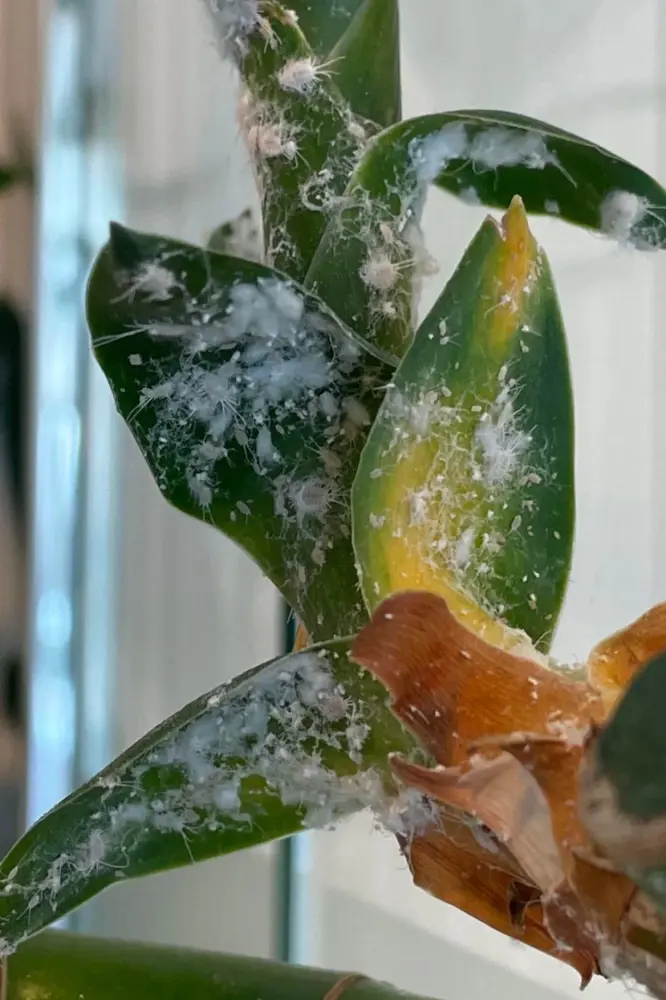
Even the most meticulously cared-for Lucky Bamboo can fall victim to pests or diseases. Therefore, if you are a plant parent, you always have to be mindful and keep an eye on your leaved babies.
But how do you do that? Well, they say prevention is the key, so, regularly inspect your Lucky Bamboo for any unwelcome visitors. And if you suspect any, make sure you snip off the affected area or use some remedies to make it go away!
Common Lucky Bamboo Pests:
Scales
These appear as small, brown bumps on the leaves or stalks. They suck sap from the plant, causing yellowing and stunted growth.
Mealybugs
These look like tiny, white, cottony patches on the leaves or in the joints of the stalks. They also feed on plant sap and can leave behind sticky honeydew.
Common Lucky Bamboo Diseases:
Fungal Growth
This manifests as brown or black spots on the leaves or stalks and often thrives in moist conditions.
Bacterial Soft Rot
This causes the stalks to become mushy and brown, often starting at the base.
Treatment Options
Once you've identified the problem, choose the appropriate treatment. Here are some options to consider:
Natural Solutions
Insecticidal soap or neem oil spray can be effective for controlling common pests like scales and mealybugs. These natural options are a good first line of defense but you always have to follow the product instructions for dilution and application to ensure safety and effectiveness.
Fungicides
If fungal disease is the culprit, a fungicide specifically labeled for indoor plants can be used. Again, follow the product instructions carefully for proper use and safety.
Monitoring Progress
After treatment, don't let your guard down and continue to monitor your Lucky Bamboo closely for any signs of pest or disease recurrence. As discussed earlier, early intervention is crucial for preventing a full-blown infestation or disease outbreak.
5. Overcrowded Container
As your Lucky Bamboo matures, its roots will outgrow the container. This rootbound state can restrict nutrient and water uptake, leading to yellowing leaves. In that case, repot your Lucky Bamboo into a slightly larger container with fresh potting mix if grown in soil.
If using a water container with pebbles, ensure the pebbles provide enough space for root growth. Also, consider adding more pebbles or using a larger container if root congestion is evident.
How to Repot your Yellow Lucky Bamboo Plant?
While addressing the root cause of yellowing leaves can often revive your Lucky Bamboo, sometimes a more hands-on approach is needed. Repotting can be a great way to revitalize a struggling plant, especially if the culprit is rootboundness, improper soil, or drainage issues.
Here's a detailed guide to walk you through the repotting process:
Prepare for Repotting
The first step is gathering your supplies starting with a new pot slightly larger than the current one. If using soil, ensure the pot has drainage holes. Opt for a well-draining, good-quality potting mix specifically for indoor plants. Then, sterilize pruning shears with rubbing alcohol to prevent the spreading of diseases.
Finally, have filtered or rainwater on hand for watering and gloves if you prefer hand protection.
The Repotting Process:
• Prep the New Pot: If using a new clay pot, soak it in water for 30 minutes to help it retain moisture. Place a drainage screen or a layer of pebbles at the bottom of the new pot to ensure proper water drainage.
• Gently Remove the Plant: Carefully remove your Lucky Bamboo from its current container. If the plant is rootbound, gently loosen the roots with your fingers to avoid damage.
• Inspect the Roots: Look for signs of root rot, which appear as brown, mushy, or dead roots. If you find root rot, carefully prune away the affected areas using your sterilized pruning shears.
• Prepare the Potting Mix: Moisten the potting mix slightly for easier handling.
• Position Your Plant: Center your Lucky Bamboo in the new pot, ensuring the base of the stalk sits at the desired height.
• Fill and Firm the Pot: Gently fill the pot with the moistened potting mix, leaving about an inch of space at the top. Firm the soil around the base of the plant to provide support, but avoid compacting it too much.
• Watering: Thoroughly water your newly repotted Lucky Bamboo until water drains freely from the bottom holes. Avoid overwatering, and discard any excess water that collects in the saucer.
• Post-Repotting Care: Place your repotted plant in a location with bright, indirect light. Avoid direct sunlight for a few weeks to allow the plant to adjust to its new environment. Water your plant only when the top inch of soil feels dry to the touch.
6. Sudden Temperature Change
A consistent climate is key to keeping your plant healthy. Lucky Bamboo thrives in a consistently warm climate, ideally between 65°F and 75°F (18°C and 24°C). Therefore, avoid placing your plant near drafts, air vents, or sudden temperature fluctuations.
Also, drafts from frequently opened windows or doors or being positioned near heating or cooling vents can stress the plant and contribute to yellowing leaves.
Tips to maintain consistent temperature:
• Find a Stable Location: Choose a spot in your home that maintains a comfortable temperature year-round. Avoid placing your plant near doorways, windows, or vents that expose it to drafts or sudden temperature changes.
• Monitor Room Temperature: Keep an eye on the room temperature and adjust your thermostat accordingly to maintain the ideal range for your Lucky Bamboo.
• Seasonal Adjustments: Avoid placing your plant near drafty windows or doors during colder months. During warmer months, ensure air conditioning doesn't create cold drafts
7. Age
As they mature, your lucky bamboo turn yellow. In this particular situation, it's natural for the lower leaves to turn yellow and eventually fall off. This is a normal part of the plant's growth cycle and shouldn't be a cause for alarm. So, think of it as making way for new growth!
Here's how to distinguish between natural shedding and a cause for concern:
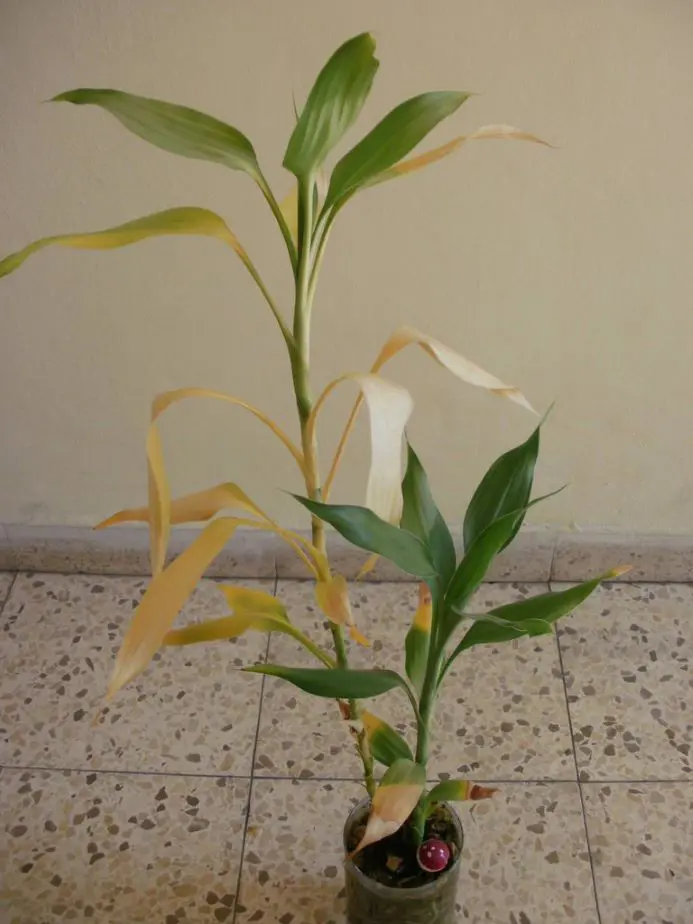
Signs of Natural Shedding
The yellowing typically occurs on the lowermost leaves, progressing upwards slowly over time. The rest of the plant appears healthy, with vibrant green stalks and healthy growth at the top.
What to Do
Simply trim off the occasional yellowing lower leaf using sharp, sterilized pruning shears. This will not only improve the overall appearance of your Lucky Bamboo but also encourage new growth to emerge higher up the stalks.
Important Unterscheidung (Distinction)
It's crucial to differentiate between natural yellowing due to age and yellowing caused by other factors. If the yellowing is rapid, affects multiple leaves throughout the stalk, or is accompanied by other symptoms like browning or drooping, then there might be an underlying issue that needs to be addressed.
Refer back to the previous sections on overwatering, light issues, or nutrient deficiency to diagnose the problem and take corrective action.
Solution To Fix Lucky Bamboo Yellow Leaves
While this guide has equipped you to diagnose and address various causes of yellowing leaves in your Lucky Bamboo, the best approach is always prevention.
And by creating an optimal environment and following a consistent care routine, you can minimize the risk of problems and ensure your lucky charm thrives for years to come.
Here are the critical pillars of Lucky Bamboo prevention:
- Provide Balanced Light
- Maintain Proper Watering
- Choose the Right Potting Mix
- Fertilize Wisely
- Temperature Matters
- Regular Inspection and Hygiene
Also, make sure you quarantine your new plants before introducing them to your collection. Set them aside for a few weeks in order to observe them for any signs of pests or diseases that could spread to your Lucky Bamboo.
Following these steps can create a haven for your Lucky Bamboo, minimizing the risk of yellowing leaves and ensuring it flourishes with vibrant green stalks and healthy growth. Your little effort goes a long way in keeping your lucky charm happy and bringing you good fortune!


Hydrangea Caring and Growing Guide
How And When To Prune Azaleas For Optimal Growth
How And When To Prune Boxwood Shrubs
How To Care For Mums All Season
How To Care For An Amaryllis Plant: Before and After Blooming Ideas
How To Take Care Of An Orchid Plant? 11 Tips And Tricks