What Do Praying Mantis Eat And Drink?

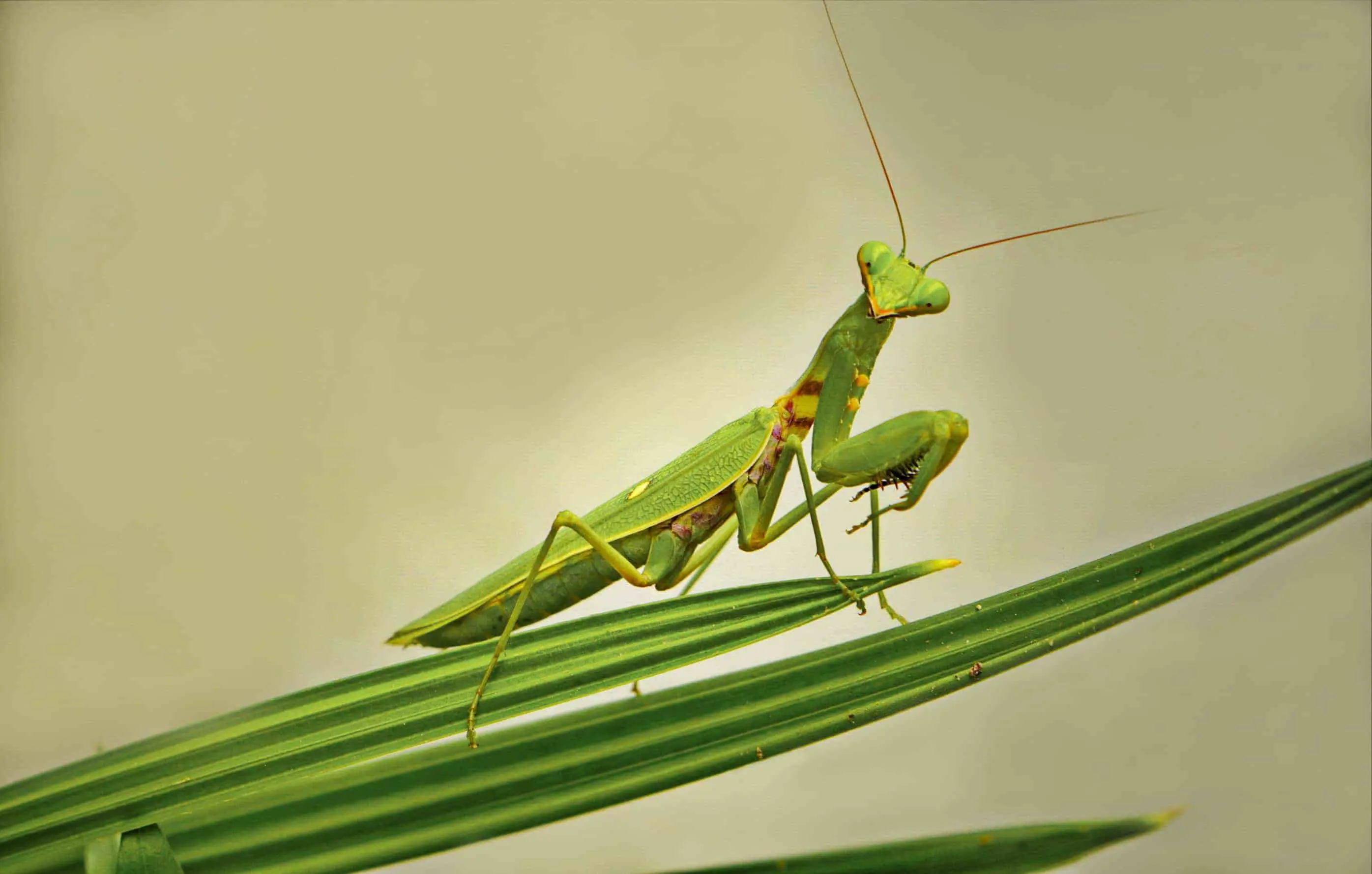
Praying mantises are fascinating creatures that capture our attention with their unique appearance, distinctive posture, and predatory behavior. With their triangular heads, long spiny legs, and swiveling necks, they seem like creatures from another world. These insects are best known for their hunting skills, and many people wonder: What exactly do praying mantises eat and drink in the wild?
In this article, we’ll explore the dietary habits of mantises, their role as predators in nature, and how they meet their nutritional needs.
What Do Praying Mantis Eat?
Praying mantises are carnivores, and they are skilled hunters. Unlike many other insects that feed on plants or organic matter, mantises primarily eat other animals. This sets them apart in the insect world. Their diet is largely made up of live prey, which they catch using their powerful forelegs, giving them the nickname “praying” mantis because of their prayer-like posture when they wait for prey.
1. Insects: The Primary Food Source
In the wild, the main food source for a praying mantis consists of other insects. They will target a variety of insects, including flies, beetles, grasshoppers, moths, and other smaller bugs. Some species of mantises will even catch and eat more aggressive or larger prey like locusts, dragonflies, and crickets.
The way a mantis hunts is truly a spectacle. They are ambush predators, meaning they wait patiently for their prey to come within striking range. Once they spot a potential meal, mantises use their quick reflexes to grab their prey with their forelegs, which are equipped with sharp spines that help hold the victim in place. They then use their strong, chewing mouthparts to tear apart the prey.
“Praying mantises are opportunistic feeders,” explains Dr. Julia Simmons, an entomologist specializing in insect behavior. “They’ll eat almost anything that they can overpower, which makes them effective predators in any ecosystem they occupy.”
2. Smaller Vertebrates and Other Creatures
While insects make up the bulk of a praying mantis' diet, they are not above catching and eating other small creatures. Some mantises will hunt smaller vertebrates, such as lizards, frogs, or even small birds. This behavior is more common in larger species of mantises, which are capable of taking down prey much bigger than themselves.
Larger mantises have been observed capturing hummingbirds or small amphibians, which might seem surprising given their size. However, mantises’ ability to remain perfectly still and their lightning-fast reflexes make them well-equipped to capture prey that is seemingly out of their reach. These more opportunistic meals provide the mantis with the necessary protein and nutrients to grow and reproduce.
3. Cannibalism: A Common Occurrence
Another interesting aspect of mantis feeding habits is their tendency to engage in cannibalism. It is not unusual for a female mantis to eat a male after mating, especially if the male is weak or unable to escape. This behavior, although disturbing to some, is thought to offer nutritional benefits to the female, as the nutrients from the male's body can support egg production.
Additionally, mantises have been observed attacking and eating each other in the wild, particularly when food is scarce. In some cases, young mantises, or "nymphs," may feed on their siblings shortly after hatching, contributing to natural population control.
Dr. Harris Greene, a biologist who specializes in insect behavior, notes, “Cannibalism is not uncommon in the mantis world. It’s a survival tactic. The larger, stronger individuals tend to survive by taking advantage of weaker members of the species.”
4. Occasionally Feeding on Plant Matter
While mantises are predominantly carnivorous, they may occasionally feed on plant matter, especially if food sources are limited. In some cases, they have been observed eating flowers, nectar, and leaves. This is more likely to occur in controlled environments, such as in gardens or terrariums, where there might be less natural prey available.
However, this is not a primary or preferred food source for mantises. Their biology and behavior are adapted to be hunters, and they typically seek out meat-based meals for their energy needs. Plant consumption is rare and usually driven by survival instincts in less-than-ideal circumstances.
How Praying Mantises Drink: Hydration in the Wild
In addition to food, hydration is a critical part of a mantis’ survival. While mantises do not drink water in the same way mammals do, they still need moisture to survive, especially in dry environments. Praying mantises typically obtain water from two primary sources: dew and the body fluids of their prey.
1. Dew and Moisture from Their Environment
Praying mantises often rely on dew, rain, or morning mist to hydrate. They can be seen drinking from droplets of water on leaves or flowers. In humid environments, such as rainforests, mantises are able to easily access moisture through dew and the general humidity of the area.
In dry climates or during droughts, mantises may be more vulnerable to dehydration. In these conditions, they will have to be more strategic in where they hunt, targeting prey that may be particularly moist, such as insects that are also drawn to water sources.
2. Moisture from Prey
Another source of hydration comes from the body fluids of the prey mantises consume. When a mantis catches an insect, it often consumes the fluids inside the prey’s body before eating the solid parts. These fluids are rich in water and other nutrients, helping mantises stay hydrated.
Interestingly, mantises can survive without drinking water directly for longer periods of time, especially if their diet includes moisture-rich prey. “The fluids they extract from their prey are enough to keep them hydrated,” says Dr. Emily Parks, a zoologist who studies insect physiology. "This is an adaptation that allows mantises to thrive in a wide range of environments."
How Praying Mantises Hunt and Consume Food
Praying mantises are patient and stealthy hunters. They don’t chase after their prey in a fast-paced pursuit, but instead, they rely on a sit-and-wait strategy. They often position themselves in a way that camouflages them, using their green or brown bodies to blend in with their environment. Their ability to remain still for long periods is one of their greatest strengths.
When an insect or small animal comes within striking range, the mantis springs into action. It latches onto its prey with its spiny forelegs, immobilizing it quickly. The mantis then begins feeding, often consuming the prey alive, although some mantises will kill the prey before beginning to eat it.
Because mantises often eat prey that is larger than themselves, they may sometimes struggle with larger, more stubborn prey. In these cases, mantises may use their powerful jaws and forelegs to break down the prey’s body for easier consumption.
Conclusion: The Praying Mantis' Role as a Predator
Praying mantises are fascinating creatures that have evolved to be highly effective predators. Their diet is made up almost entirely of other animals, from small insects to larger prey, including small vertebrates. Their hunting strategy—waiting patiently for prey and then capturing it with lightning-fast reflexes—makes them one of nature’s most skilled ambush predators.
Though they can occasionally consume plant matter, praying mantises thrive on a diet rich in protein and moisture. They obtain hydration both from the moisture in their environment and from the body fluids of their prey. These unique eating and drinking habits allow mantises to survive in a variety of habitats, from tropical rainforests to drier, more arid regions.
Whether they’re feasting on crickets or chasing down a small bird, mantises are an important part of the ecosystem. Their predatory behavior helps control populations of other insects, which can have a significant impact on plant life. Understanding their dietary habits and their role in the food chain highlights the complex and often overlooked world of these remarkable insects.

What Do Crickets Eat In Nature and Wild?
What Do Snails Eat In Your Home And Garden
Potato Blight: Causes, And How To Get Rid Of

Why Is My Hydrangea Not Blooming? 7 Reasons and Fixes To Know
Fertilizer Burn: What Does It Look Like And How To Fix?
What Does A Tick Bite Look Like And How To Deal It