What Do Cicadas Eat In Your Yard And Wild

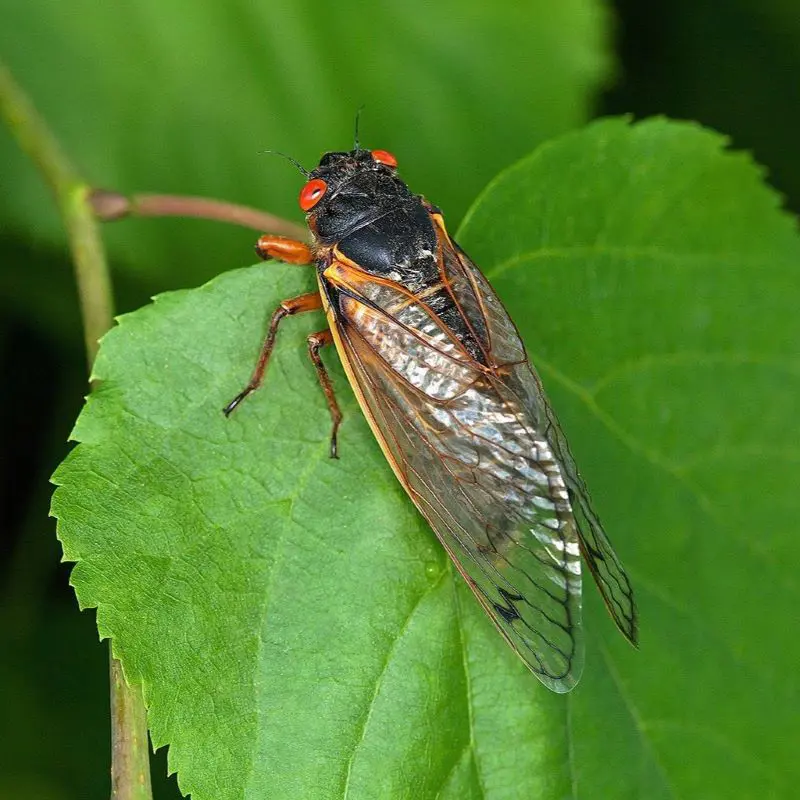
Cicadas are members of the superfamily Cicadoidea and are physically distinguished by their stout bodies, broad heads, clear-membraned wings, and large compound eyes. They make loud sounds through their wings.
Although they prefer to feed on the xylem sap of the trees and plants which impacts the health of the plants and trees in your yard. They feed on the roots and branches of the tree which degrades the sustainability of the tree. Their loud sound-producing habits are also intolerable.
1. Xylem Sap
Cicadas like to feed on the xylem primarily. It is a watery fluid that is transported through a plant. This sap is a combination of water, minerals, and some amount of nutrients. Xylum is found in the trees and plants that are planted in your yard.
Cicadas need to consume this sap in large quantities as it is a low-nutritional food. They perform the feeding process by tapping into the xylem. They make their body hydrated and gain some energy that is needed to sustain their life cycle and continue reproductive activities.
2. Maples
Cidas are highly preferred towards the matured tree-like oaks and maples that are planted in your yard. These trees provide a consistent and suitable level of supply of xylem sap that makes a perfect place for cicadas to take place.
These trees have expansive root systems and thick trunks that allow large volumes of cicadas to feed on them continuously. This makes a long-term spot for the cicadas as they can rely on these trees to feed on without difficulties.
3. Deciduous Trees
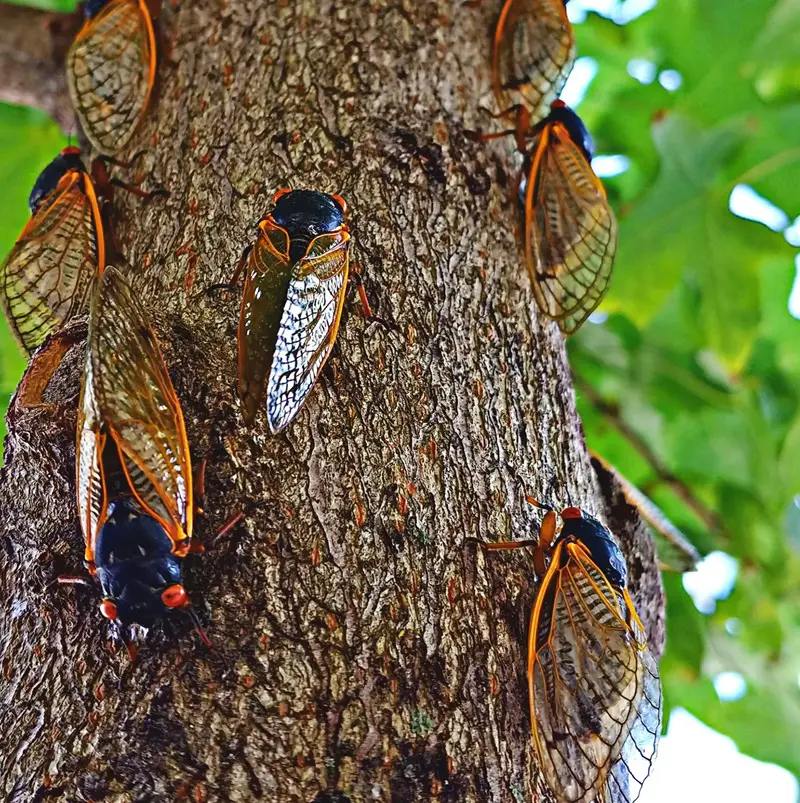
Deciduous trees annually shed their leaves which is a preferred food source for the cicadas. In the time of spring and summer, these deciduous trees can produce high levels of xylem sap that are essential for the survival of cicadas.
The production and flow of sap in the deciduous tree in the most common during the growing season. It makes the deciduous tree an ideal spot for the cicadas to survive during their adult. Also, they continue their reproduction on these trees.
4. Evergreen Trees
Though cicadas preferred to be fed on deciduous trees for xylem sap they also feed on evergreens like pines and firs as alternatives. These trees are not so suitable due to their thick bark and resinous sap. This creates difficulty in feeding on xylem sap.
However, in environments where deciduous trees are in the high range, cicadas adapted to feeding on these low-preferred trees to fulfill their necessary for their survival. Also, they continue their reproduction here depending on the food source.
5. Branches and Twigs
Cicadas usually make a target for small branches and twigs of the tree while feeding. These parts of the trees have thinner bark in comparison to other parts of the tree. This makes it easier for cicadas to pierce the layer and get access to the xylem sap.
The xylem sap flow in these parts is the same as the other parts with easy access. It allows the cicadas to feed with quite less effort for feed. This selective feeding also helps cicadas to increase their energy using minimum input.
6. Canopy
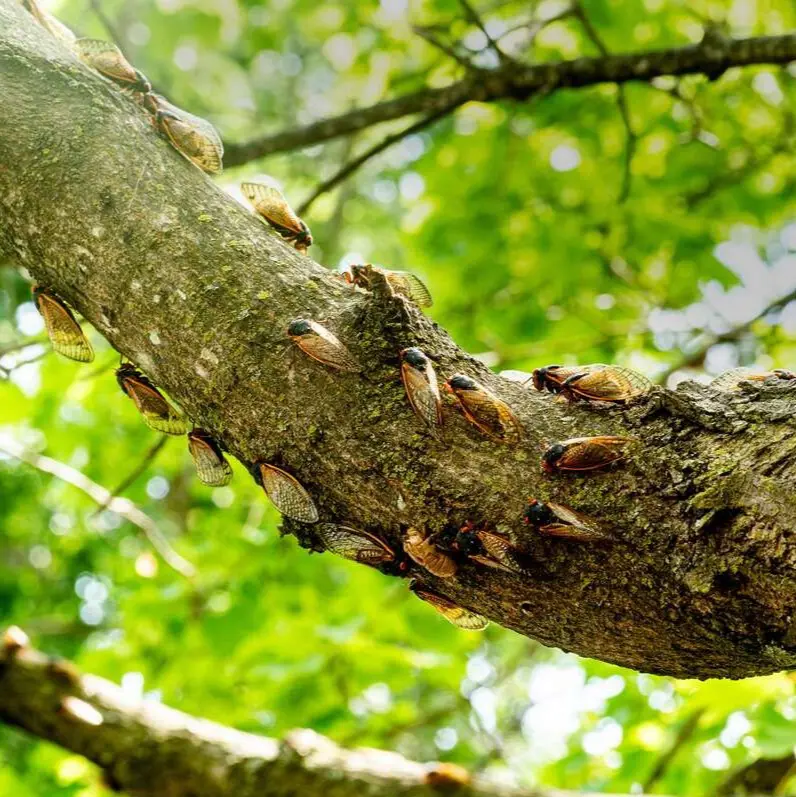
The canopy is also one of the feeding parts for the cicadas where the sunlight helps in the proper flow of xylem sap due to high altitude. The upper branches and twigs of the trees are attractive as they contain fresh and more sap that is rich in nutrients.
Feeding in the canopy also helps to reduce competition from other insects and reduces the risk of predators. This allows cicadas to get more sap to feed safely and effectively during their mature period. This is one of the alternatives they choose to feed.
7. Fruit Trees
Cicadas also feed on fruit trees like apple, pear, peach, and cherry trees that are available in your yard. Though the flow of xylem sap is lower than the other trees it becomes sufficient for cicadas to rely on as a food source.
The content of the nutrients in these fruit tree saps is also lower in comparison to others. But it helps the cicadas to get fed on during their adult stage. The fruit tree provides minimal requirements of food source for the cicadas.
8. Root
The nymphs of the cicadas spend most of the time of their lives living underground while depending upon the roots of trees and plants as a source of feed. They extract the xylem sap from the roots to continue their growth and development for the years.
Feeding on the root is important to the nymph during this stage. It provides the necessary nutrients and hydration that are required for the cicadas to develop into their adult form. They are dependent on these parts for food sources and come out in the adult stage.
9. Grass and Shrubs
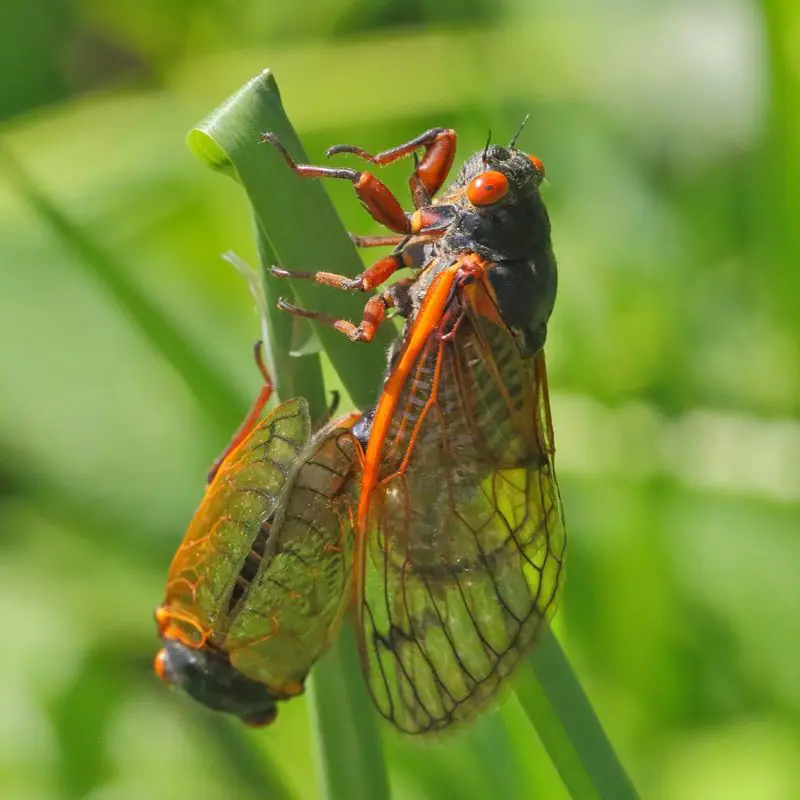
In case large tree roots are absent to feed on for cicadas they choose to feed on the roots of grass and shrubs as an alternative. These smaller parts of the plants have less sap than trees but still help the nymphs to get food sources.
Cicadas nymphs usually feed on these sources in the environment where the tree plant has covered the area. Nymphs also choose the easy and nutrient-rich roots that are available. This process continues until the cicadas turn into adults and feed on larger trees.
10. Woody Plants
Cicadas use their special mouth feature that is sharp-like need that helps them to pierce the bark of the woody plants. Once their mouth part gets into the bark they extract the xylem sap from it. They need to provide them necessary nutrients.
Though it is not so reliable source of food it helps the cicadas to fed during their adult stage. They prefer to get fed on large woody plants as they provide more xylem sap than other small trees. It is an indication that cicadas extract sap on whatever they can.
Why Do Cicadas Makes Noise?
Cicadas usually sing during the heat of the day. In addition to attracting a mate, the loud noise repels birds. The cicada's song is painful to the birds' ears and interferes with their communication, making it difficult for the birds to hunt in groups.
Male cicadas in the same brood will stick together when calling to increase the total volume of noise. This reduces the chances of bird predation for the whole brood.
Even cicadas must protect themselves from the volume of their singing. Both male and female cicadas have a pair of large, mirror-like membranes called the tympana, which function as ears.
What are Periodical Cicadas?
Periodical cicadas are insects that spend most of their time living underground on the surface, feeding off the sap of tree roots. They emerge to transform into adults and mate. Some periodical cicadas emerge every 13 years and others emerge every 17 years. The males "sing" by vibrating a membrane on the sides of their bodies.
After mating, the female makes slits in tree branches and lays eggs there. The eggs hatch six to seven weeks later, the nymphs fall to the ground and go into the soil, and the cycle begins again. The adult periodical cicadas only live three to four weeks.
Annual Cicadas vs Periodical Cicadas
Though the features and characteristics of these two cicadas are not so different and have almost the same similarities. But their habits and living patterns are different from each other. Some of the differences are discussed here.
Annual Cicadas
Annual cicadas usually have a life cycle that lasts 2 to 5 years period. But the different broods emerge every year due to which they appear annually.
They emerge each summer mixing with generations considering that the adults are present throughout the year. Their population is not so crowded as they are stable and reproduce within limits.
Periodical Cicadas
Periodical cicadas have longer life periods than annual cicadas that is 13 to 17 years. They emerge in large groups during the time of specific years in late spring to early summer.
It is a strategy they use to be safe from predators. They usually emerge in huge swarms also sometimes in million numbers. They do this to continue their legacy.
What Do Cicadas Do While They’re Underground?
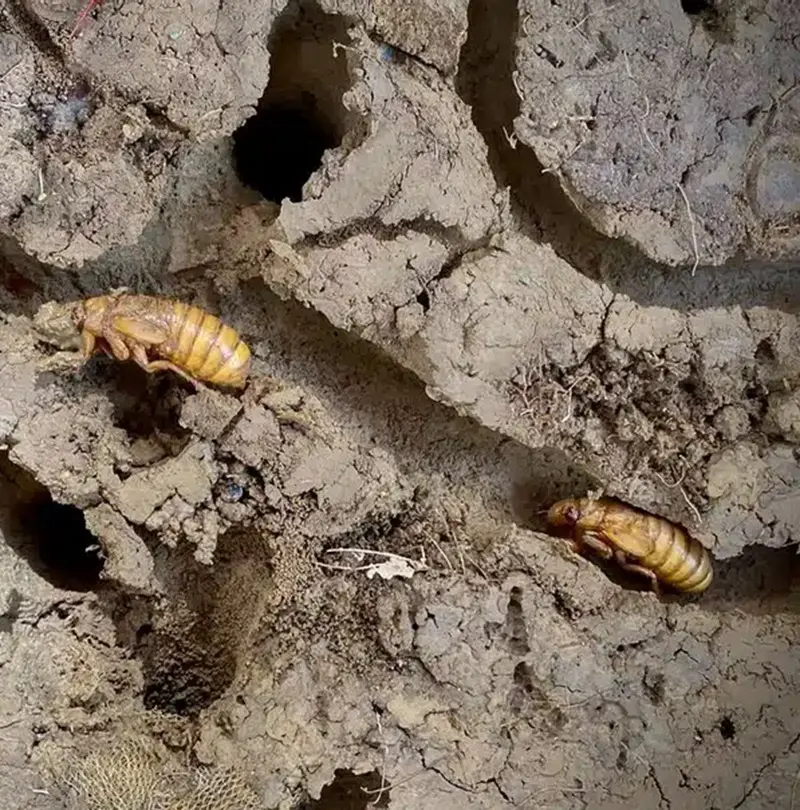
We don’t have any idea about what happens underground because we can’t see it. Each cicada nymph is a couple of feet down there, in a little burrow in the soil, doing its work and continuing its daily cycle and feeding on the fluid in tree roots.
As far as we know, they don’t crawl around much, and they don’t are not able to communicate with each other cicadas. They stay there for 13 or 17 years. Then, a few weeks before they’re scheduled to come out, they unplug from their roots and dig a tunnel up to the surface.
Feeding on Roots
Cicadas nymphs feed on the roots of the trees from which they extract xylem sap as their food. Also, they rely on shrubs and other alternatives. They use their specially designed mouth parts provided by nature that help them to tap into the roots and extract the sap. This provides them with water and nutrition requirements.
Development and Growth
While living underground the nymphs of cicadas go through several developmental stages also called instars. Their size increases as the years pass. Depending on the species of the cicadas this underground phase usually last between 2 to 17 years.
Burrow Maintenance
Cicada nymphs dig and maintain their burrow by removing the soil. These tunnels and holes allow them to shift from one root system to another and help to maintain a suitable environment for their survival which is proper humidity and temperature.
Slow Metabolism
The nymphs of the cicadas have slow metabolism that allows them to survive for many years living under the ground with minimal food sources. This slow rate of life is a part of the cicadas that enables them to wait up to 17 years before they emerge.
Avoiding Predators
While being underground it is beneficial for the nymphs as they can avoid any predators living upper the surface. By residing under the ground they get protected from predators like birds, mammals, and other predators on the surface that are hunting for prey.
Preparing Emergence
During the final year of their emergence, the nymphs of the cicadas dig upwards towards the surface of the ground by creating a tunnel to escape. As time passes the emergence period arrives they stay close to the ground surface waiting for the suitable time and conditions that is usually warm temperatures and high humidity.
Homing Behavior
The nymphs of cicadas are tolerant to all conditions of soil and can reside on a wide range of soil. During the period of droughts or colder years, the nymphs can survive by going deeper into the soil. They reside where the soil temperatures are stable and moisture is suitable.
Preparing to Surface
As time passes underground and a merging period arrives the nymphs create small chimneys made of mud above their burrows in some of the soil types. The reason for creating the nud chimneys is to help them to breathe and monitor the condition of the surface indicating a safe sign.
How Long Can Cicadas Survive Without Food?
Cicadas are primarily dependent on xylem syrup for feed which they extract from the trees and plants. In the absence of food, their survival rate is minimal. Here we have discussed how long cicadas can survive without food.
Adult Cicadas
The adult version of cicadas is primarily focused on reproduction and usually survives for only a few weeks. They need a xylem sap for hydrating and providing energy to their body. If they are deprived of food sources they may only survive for a few days to a week. The period depends on the environmental situations like humidity and temperature around them.
Nymphs
The nymphs of cicadas reside underground for several years by feeding on the roots of trees. If they are deprived of food sources due to damage of roots then they are likely to die within a few weeks as their main source of food is absent. They rely on these sources for survival and feds on them during their developmental period.
Damages Done By Cicadas
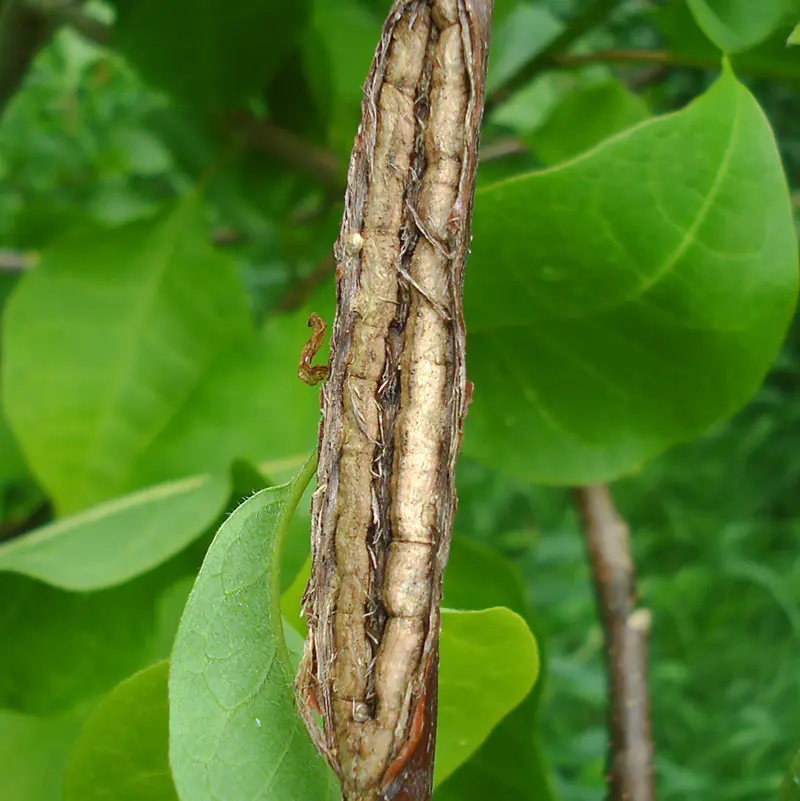
Adult cicadas have piercing-sucking mouthparts. They feed very little. Any feeding is limited to sucking sap from young twigs. The principal damage suffered by trees and shrubs results from egg-laying by the adult female.
Egg-laying Damage
The female cicadas use their obi-posters to cut the bark of small branches of the trees to lay eggs on them. These slits can damage the vascular system of the plant. This is the most common damage done by the cicadas to young or small trees.
Reduced Fruit Production
Due to cicadas fruit production may decrease as they feed and rely on the fruit trees. If cicadas damage fruit-bearing branches of the tree then it can result in fewer blossoms and that leads to few fruit production in the season.
Structural Damage
The heavy exposure of the cicadas can cause heavy damage to the structure of the young trees and shrubs. The process of repeatedly laying eggs at the same part of the breaches cause the weakness of the branches, making them break during heavy storms and their heavy weight.
How To Get Rid Of Cicadas
Though cicadas may not be as frustrating as other insects that bite randomly at you the noise of cicadas is unbearable to hear. If these insects has been seen in your yard then here are the ways to get rid of them.
Use a Water Hose

If you are annoyed by cicadas in your yard then you can try turning on the water hose and spraying them out of your yard. Also, be prepared to do this quite often since plenty more of them will be in an affected area for most of the summer.
Avoid Lawn Care During the Day
When it’s time to mow the lawn it is ideal time to do it in the early morning or at dusk when cicadas are least likely to be out. Male cicadas are vibrational creatures and may fly to you and your lawn mower if you’re running it during the day.
So, to avoid them mistaking your vibrating lawn mower for a potential mate, working in the early morning or at the end of the day is a good idea.
Make Your Yard Unattractive for Them
Female cicadas seek the perfect place to lay their eggs when they emerge. If you have the type of vegetation they like in your yard, they’ll likely visit your place more than your neighbors. If you are so done with these insects and don't want to make your space their mating place then it is better to cover the trees.
It will be suitable if you use mesh netting to cover your trees, shrubs, and other important plants. It will be a good idea to apply foil barrier tape around the trunks of trees. If you have a pool or hot tub on your property, cover it up since cicadas can get into it, die, and clog up the drain.
Welcome Beneficial Insects and Predators
Another way to get rid of cicadas is to be open to allowing their predators to visit your property. Many types of birds love to feast on cicadas, as do spiders, bats, cicada-killer wasps, raccoons, squirrels, and chipmunks.
Even your cat or dog may enjoy a cicada or two. Just be careful not to let your pets eat too many since they can upset their stomachs. Although you may usually call pest control for these other pests and wildlife in your yard, this may be an excellent time to let these critters devour the cicadas.
How to Protect Your Young Trees
If you have young trees on your property, taking proactive measures can help minimize the impact of cicadas.
Put off planting
Consider waiting to plant young trees in your yard until after the cicadas have come and gone. Fall is also a great time to plant trees and shrubs.
Cover young trees
Cover young trees with fine netting or cheesecloth to keep cicadas away. If possible, you can cover the whole tree with netting, being careful to gather and secure it at the trunk near the ground.
Are Cicadas Edible?
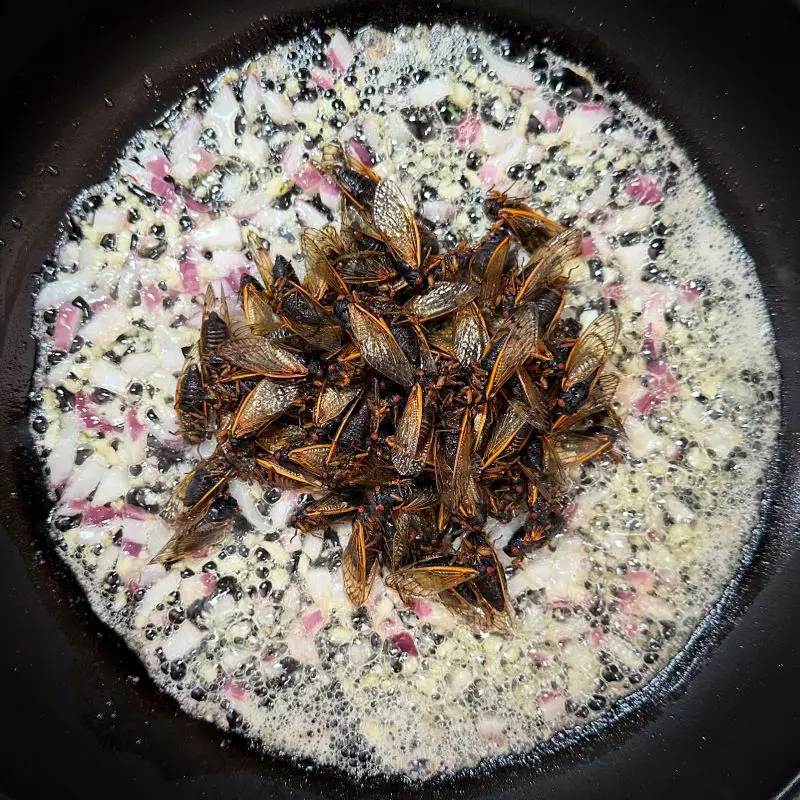
Cicadas are popular for their deafening mating calls, which are as loud as lawnmowers. They emerge after more than a decade underground and become tasty meals to birds and even the occasional human. That’s right, cicadas have been known as an eco-friendly and high-protein alternative to cattle and poultry farming.
They’re low in cholesterol, crunchy, and carry what has been described as a nutty flavor and shrimp-like quality. Restaurants have featured the bugs in experimental menus, while several cookbooks have even been published dedicated to recipes involving cicadas.


What Do Praying Mantis Eat And Drink?
What Do Crickets Eat In Nature and Wild?
What Do Snails Eat In Your Home And Garden
Potato Blight: Causes, And How To Get Rid Of

Why Is My Hydrangea Not Blooming? 7 Reasons and Fixes To Know
Fertilizer Burn: What Does It Look Like And How To Fix?